Words by Willow Scarlet
Illustrations by Anamika Hans-Chokria
Indian goth artist Willow Scarlet explores the fine line between cultural appreciation and appropriation through five examples of South Asian cultural items that have influenced alternative fashion and beauty.
This article was originally commissioned in 2022 for The Fashion Issue. The issue never made it to print, but we’re now sharing the articles with you on our website.
Growing up as a South Asian alternative kid, we have to deal with little-to-no representation in alternative subcultures. When it comes to the goth subculture, the situation is worse as the “pale as dead” skin stereotype has been romanticised for four decades, contributing to the exclusion and erasure of Black and people of colour in the goth scene. Although representation of goths of colour has improved in recent years, we still rarely see a South Asian goth musician, artist, model or other creative in the limelight within the subculture.
However, believe it or not, South Asian culture has influenced goth and other alternative subculture fashion and beauty. Similar to mainstream pop culture in the West, alternative subcultures have been taking elements of South Asian cultural significance for decades to look “exotic”, “mysterious” and “sensual” – and as shock value.
On an individual level, it seems relatively harmless if a non-South Asian person wears a bindi, nath or choodi. In fact, globalisation and living in the digital age makes borrowing from other cultures unavoidable – but there is a fine line between cultural appreciation and appropriation. You start to see the problem when major white-owned brands copy folk and tribal South Asian art and designs, use it on their products and sell them under their brand name.
“Globalisation and living in the digital age makes borrowing from other cultures unavoidable – but there is a fine line between cultural appreciation and appropriation.”
Fashion brands in the West have a centuries-long history of ripping off textile designs developed by South Asian artisans. Today, as most countries across South Asia fail to provide secure employment and wages to our artisans, the last thing they need is companies in the West stealing and mass producing their designs, without acknowledgement or payment. The commodification, commercialisation and profiteering off of the work of our artisans, tribes, and culture sees many struggling to make ends meet while these companies rake in profits.
Most subcultures are against the mainstream, capitalism, racism and consumerism. And many of the alternative styles stemmed from DIY, thrifting and recycling old jewellery, clothes and decor. Yet, alternative (fast) fashion brands are hugely popular in the scene despite this ethos, with some even called out for racism, cultural appropriation and stealing from independent artists.
There’s a lot to discuss and unpack, but here are five ways South Asian culture has influenced or been appropriated by alternative subculture fashion and beauty.
1. Nath
By the time punk and goth started flourishing in the 70s and 80s respectively, piercing and tattooing were already a big form of self-expression. But the cultural significance of piercings and tattoos was and is often overlooked.
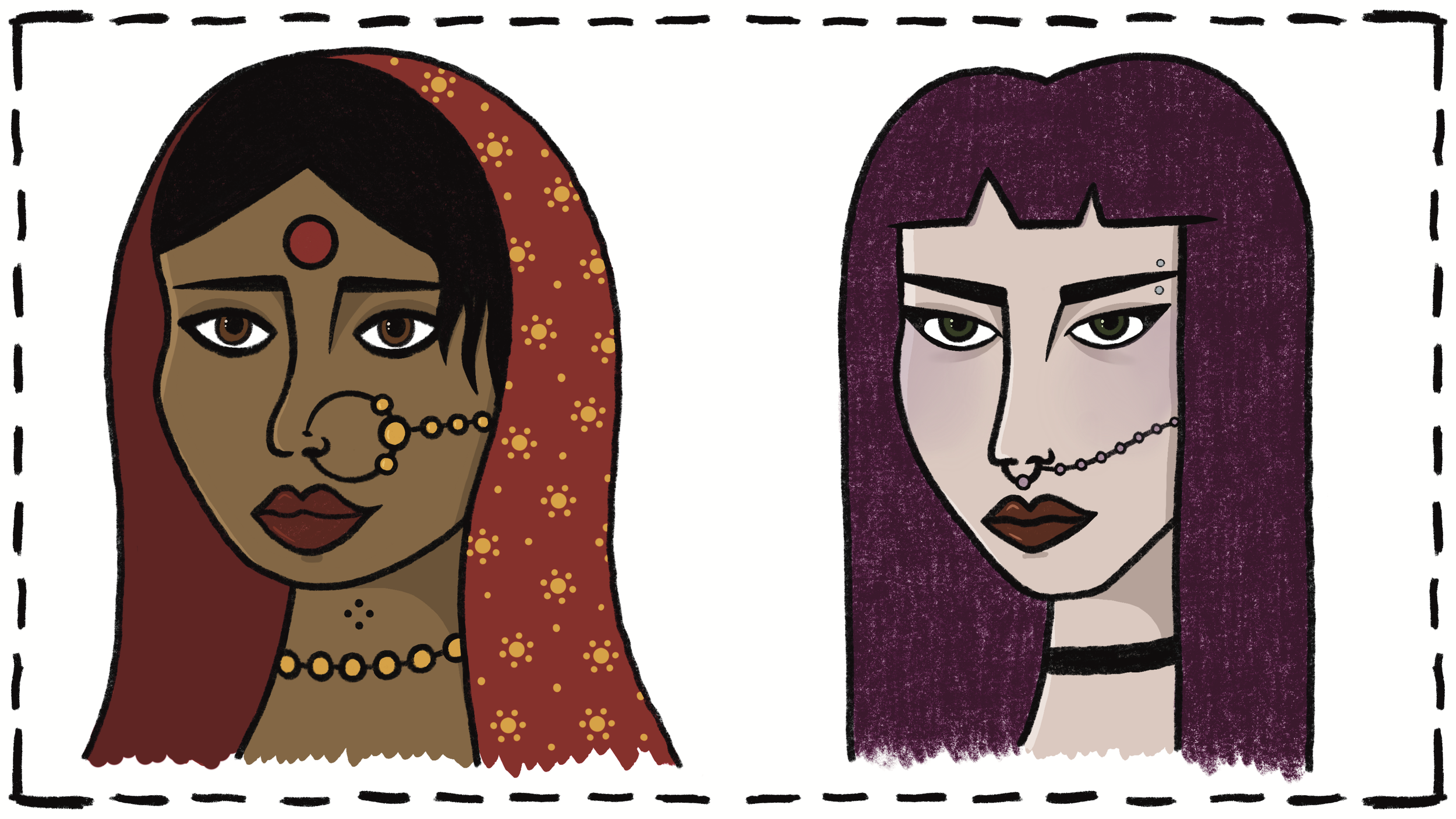
Nath is a nose ring or stud with a chain that attaches to the hair or ear. It is first referenced in early Hindu Vedic texts c.1500 BCE and became popular around the 9th and 10th centuries. It is traditionally worn by Hindu brides on their wedding day to honour Devi Parvati, the goddess of marriage. Nath is also worn by women during Durga Puja in West Bengal to pay honour to goddess Durga and worn by women of other religions across South Asia including Islam, Buddhism and Jainism to name a few.
It’s not uncommon to see goths and punks wearing nose chains. They can be a DIY creation by adding a chain to their ear piercing and nasal piercing or bought from an alt fashion brand. But often the roots of this jewellery and its importance in South Asian cultures is ignored. As nose chains became associated with established subcultures and scenes, its origins were forgotten.
2. South Asian Oxidised Tribal jewellery
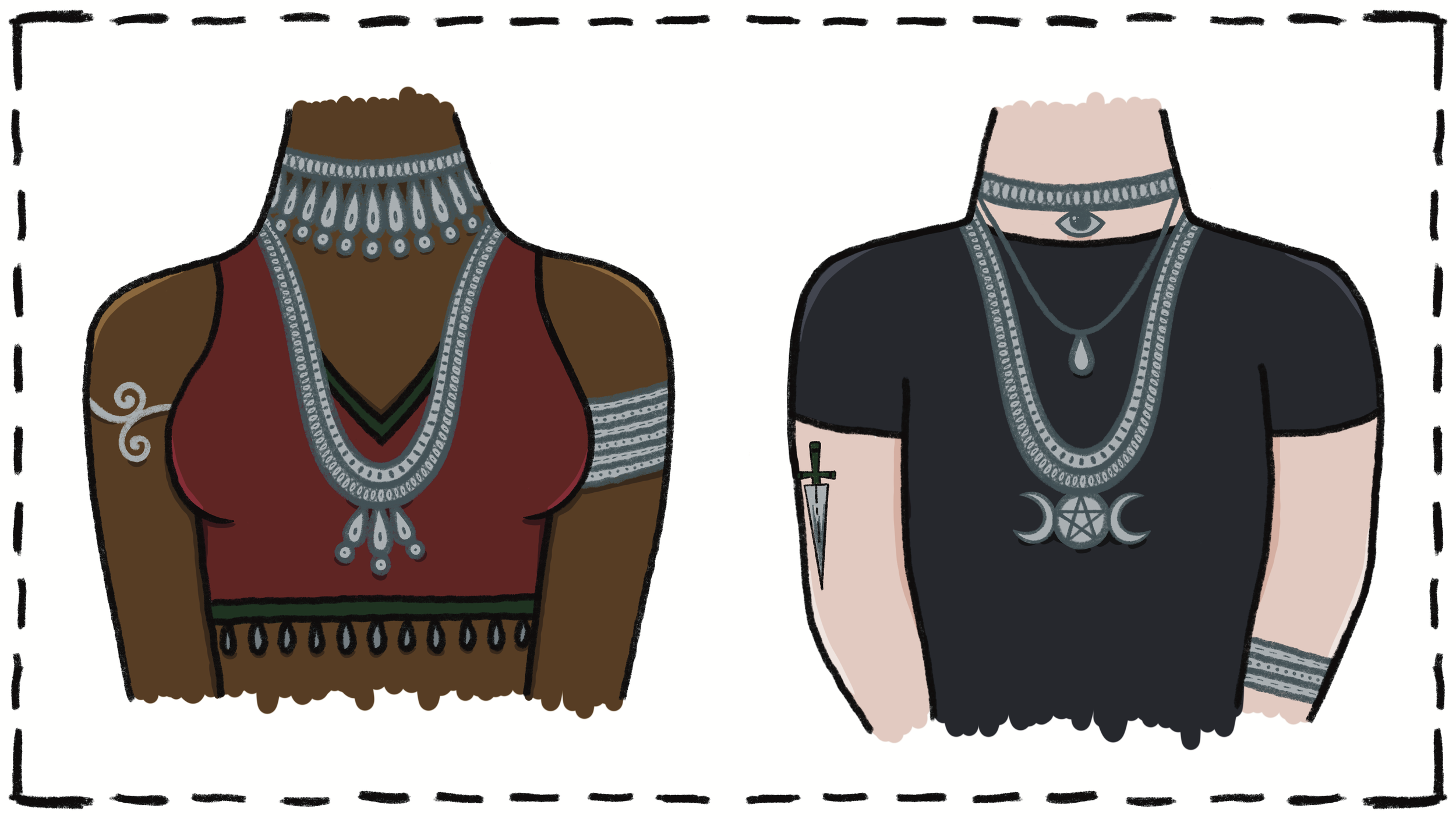
In her book The Goth Bible: A Compendium for the Darkly Inclined, Nancy Kilpatrick discusses the importance of jewellery in goth styles, especially the silver jewellery with elegant designs. South Asian tribal jewellery (e.g., Kangan, maang tika, Choori (Bangles), Haar, Jhumki, Tribal Kada) made its way into the subculture when people started using the terms like “gothic”, “occult” and “exotic” to describe it. This has helped create goth offshoot styles like ethno-goth, tribal goth and hippy goth which has seen the roots of South Asian tribal jewellery erased.
It’s not uncommon to see alt and occult brands adding elements like the ankh, skulls, bats, fangs and pentacle added to South Asian tribal jewellery, without acknowledging the origin.
3. Kamarbandh and cultural belts
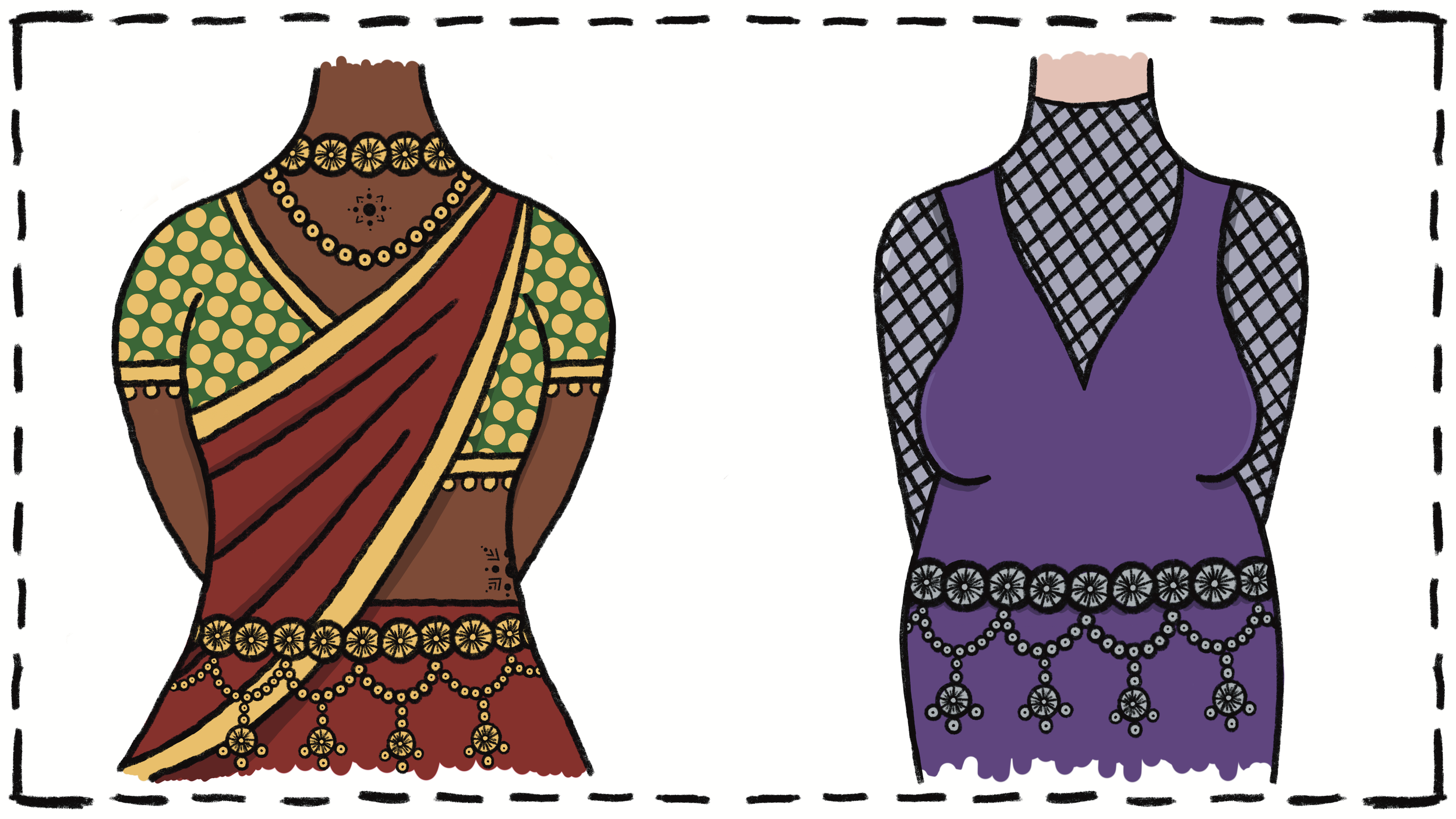
Kamarbandh is a type of body jewellery worn around the waist. It’s typically worn by women during cultural ceremonies across South Asia. For example, in Hinduism it is an important part of a woman’s Solah Shringar (16 Adornments) and is a sign of prosperity.
These belt jewelleries are widely used by whimsigoths, tribal goths and ethno-goths to name a few. You’ll also see features such as bird feathers, tribal jewellery pieces, indigenous beading patterns with occult and gothic pendants, charms and aesthetics.
4. Bindi
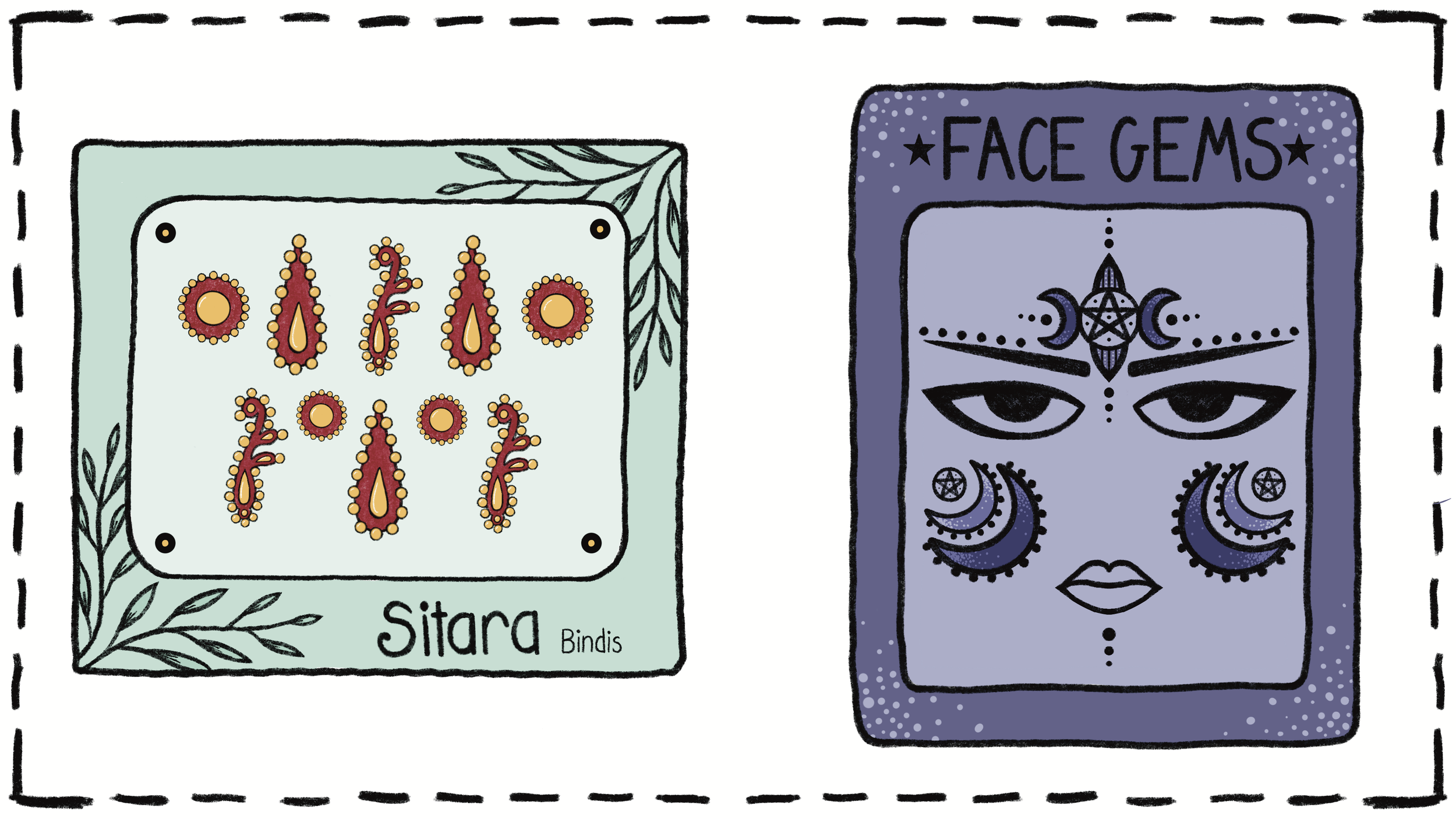
The most widely appropriated South Asian cultural item is probably the bindi. Bindi holds spiritual meaning in Hinduism, from being an auspicious sign of marriage to enhancing the powers of chakra. Other than spiritual meaning, the act of putting a bindi on one’s forehead is shared culturally among many religious and ethnic groups across South Asia. Pathan women often wear bindi, with the art of decorating one’s forehead with kumkum and kajal being passed down over centuries by elder women in society to the younger generations.
In south Indian states (e.g., Kerala, Tamil Nadu, Karnataka) women put a black bindi/dot or designs, known as karuvelam pottu, on their infants’ forehead to keep them safe from Kali Nazar.
In Western subcultures the act in itself is simply referred to as forehead stickers and forehead tattoos - goths, metalheads, rivetheads, scene kids and punks have now been using bindi for decades. Bindi has even grown in popularity in mainstream culture and can often be seen worn by people attending music festivals.
5. Kajal
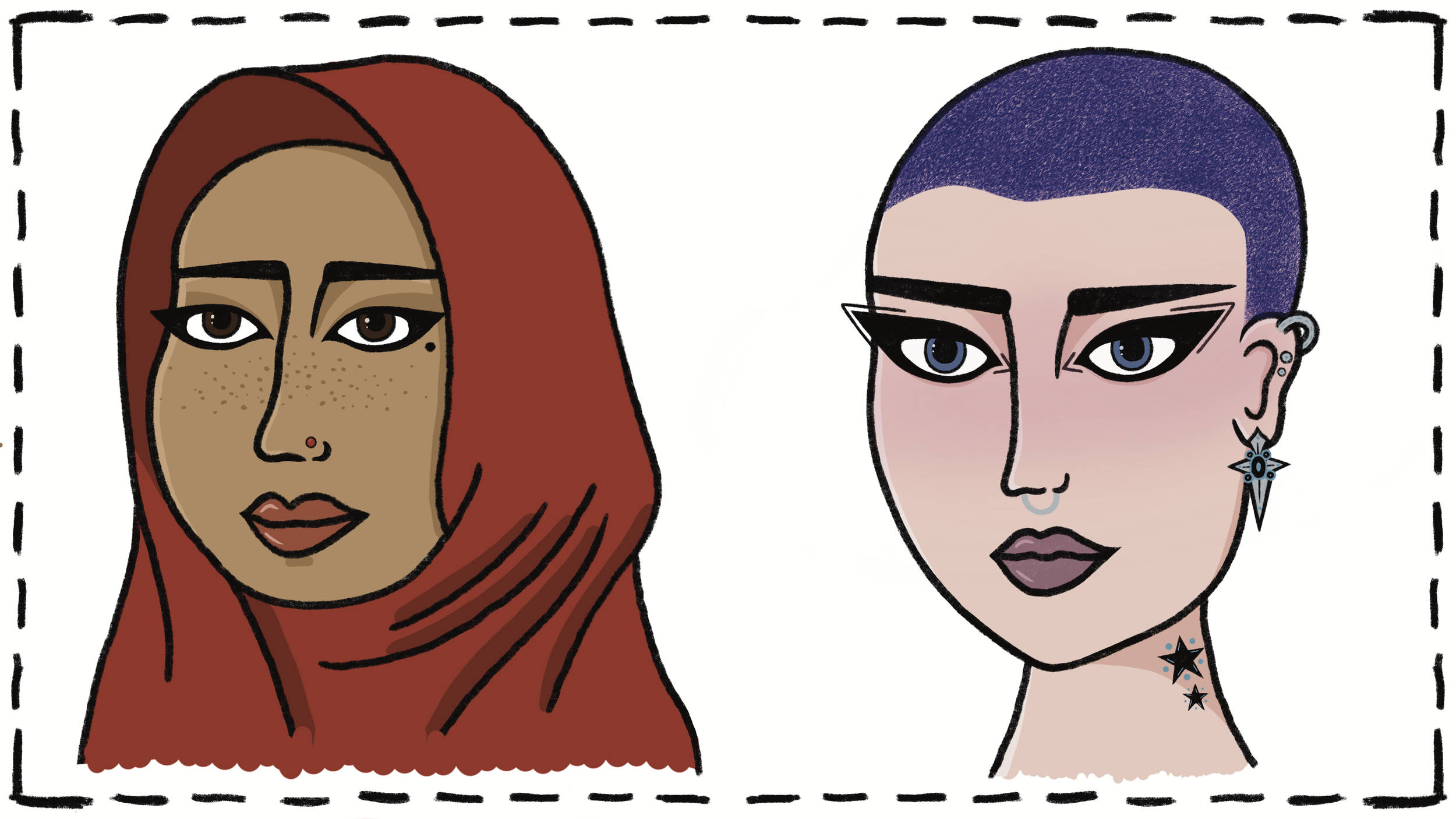
Applying kajal, also known as kohl or surma, on the waterline is an ancient Middle Eastern and South Asian practice among both women and men. It was believed to protect a person’s eyes from the desert sand and sun’s glare.
Kajal has been significant to Muslim women for centuries for cultural and demographic reasons, and in Hinduism it’s one of the main ingredients of ‘Solah shringar’ (16 Ornaments) of Goddess Durga and newly wed brides. Dramatic and winged kajal has also been used in Indian dance forms (such as Kathak, Kathakali, Odissi, Bharatnatyam) for centuries to emphasise the emotional expressions of dancers.
It might not be appropriation since drawing on one’s eyes or putting eyeliner has been common among many cultures and countries throughout cultural and fashion history, but what makes South Asian and Middle Eastern kohl/kajal/surma unique is the boldness and sharpness of it. This influenced the dramatic eye makeup that goth, punk, metal and other alternative subcultures have become renowned for.
Making fashion statements out of things which are culturally important creates problems. Supporting brands who appropriate Indigenous or desi art and craft steals the market from the artisans who have toiled for ages to preserve the art. For example, white artists and capitalist companies dominate the international oxidised jewellery industry, preventing South Asian tribal artists from thriving in the global market. This is a sophisticated form of the systematic deindustrialisation that colonists enforced on our artisans in the past two centuries, with the goal of eradicating native handicraft industries in colonised nations so that Western industrialisation could flourish.
While these items of cultural significance are repurposed and sold worldwide by big brands, South Asian people continue to be discriminated against by Western societies for wearing their cultural elements, clothes and jewellery. We also frequently witness the exoticisation of South Asian cultures in Western media, particularly in films. The negative impacts of cultural appropriation apply to both mainstream and alternative subcultures equally. South Asian alternative people frequently experience hostility while criticising the incorrect application of traditional components by people in the mainstream – although this is not unique to South Asian people. Cultural aspects only become trends when a group of individuals with racial privileges create fashion statements out of them.
Alternative South Asian people barely get any representation while our culture has been used by non-South Asian people in these subcultures for decades. Not acknowledging our culture while consuming it hurts our artisans and handicraft economy, misrepresents our cultures and stigmatises us to racist and inaccurate depictions. Therefore, it’s essential to understand the impact of cultural appropriation so that we can claim elements that originated on our land and by our people and to the centuries-long trauma we collectively faced due to colonisation.
About WILLOW SCARLET
Willow Scarlet is a non-binary goth makeup and music artist based in India. Their music incorporates classical Indian and gothic elements creating a hauntingly unique music experience. They run a small business called Desi Gothic store where they make and sell customised gothic, desi and metalhead accessories.