Interview by Naz Toorabally
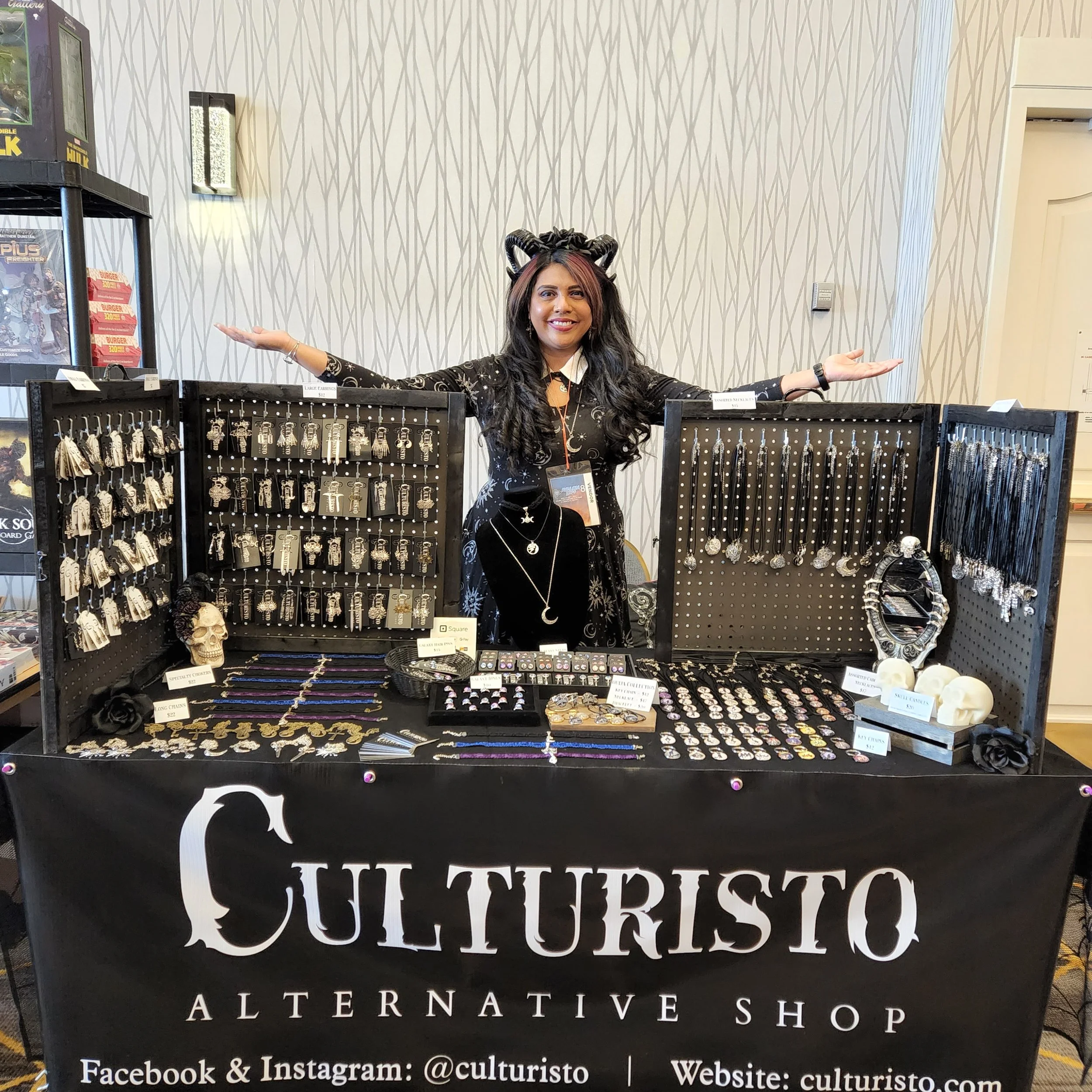
Sasha Persaud, founder of Culturisto Alternative Shop
Sasha Persaud is the founder of alternative jewellery brand Culturisto Alternative Shop. After moving to Newfoundland and Labrador, Canada from Toronto, Sasha started creating her own alternative jewellery at home out of necessity. But after people at local gigs showed interest in her jewellery, Sasha started selling her creations.
Sasha and I spoke in the summer of 2022, and the interview was originally meant to be published as part of The Fashion Issue, but it never made it to print. In this interview Sasha told us the story behind Culturisto Alternative Shop, how her Indo-Guyanese heritage has influenced her work and more.
Naz: Hi Sasha! Tell me about your brand and how you got started
Sasha: Our brand is called Culturisto Alternative Shop and specialises in a lot of goth-inspired, steampunk, witchy vibes. We also have influences from other subcultures like punk. We use the term ‘alternative’ just because that's just the term that people use to find this type of stuff on Google.
I was a big metalhead in high school and I've always been attracted to more of the darker aesthetic growing up. Towards entering my thirties I started embracing it a lot more and when I moved to Newfoundland, we didn't have any alternative shops. I’m from Toronto and any type of group can find their shops there, but here it's smaller and the shipping’s just insane so I decided to make some chokers for myself. I went to a couple local metal shows and people started liking them and I said, “yeah, I can make you one and customise it.”
From there I started getting influenced by bracelets and other accessories and it's grown since. We've been around for about two and a half years and we're just bringing that scene here and there's a lot of interest and hopefully overall the scene's gonna grow!
N: It's great to hear how it’s grown so organically. Do you design and create all the pieces yourself?
S: Right now I mostly make the majority of our stuff. We do order the pendants in though and if there are certain symbols – as much as I'd love to hand carve it – I wouldn't be able to make it as affordable and accessible here if I were to do that. Most of the stuff we do make. I also reach out to designers across Canada to get some of the darker symbolism that’s very prominent.
I’m also branching out with some of our local goth community members who are a little bit shy or have a little bit of social anxiety. For example, I'm starting to sell some stickers from one of my good friends who doesn't do too well in big crowds.
So as I'm meeting people and I'm seeing that they have things, I'm like, “yeah man, bring it to my table.” We wanna offer more things that maybe I can't make, or that's maybe not even jewellery, but is around the aesthetics. So I'm like “let's do it!”
N: That's really cool. Is there a particular subculture that you feel a connection to? You mentioned earlier using “alternative” as an umbrella term.
S: To me, aesthetically I would definitely say goth, but I do resonate well with the metal community as well because that's my preferred taste in music. I do dabble in a lot of things. I love punk music, I love going out and supporting things, and I'm a big, sci-fi geek, so I love the steampunk culture too.
Spirituality-wise, I just love everything to do with botany and earth and a lot of the witchy aspects of most cultures. And I’m learning a lot. I got all this celestial stuff going on here but if I had to pick a couple, then I would say the metal and goth community.
“I went to a couple local metal shows and people started liking them and I said, ‘yeah, I can make you one and customise it.’”
N: What has it been like starting your own brand? Do you focus on this full time?
S: It started off as, not necessarily a hobby, but just making things for myself that I couldn't find here. But as it stands right now, I consider it my second full-time job. I also have another job that pays the bills of course. That's the struggle with being an artist sometimes. But as things grow the dream is to eventually develop the brand more and venture off into things in this world. It's hard because I do lots of other creative stuff but always need another source of income just in case anything goes wrong.
N: Do you have any advice for anyone looking to start their own brand?
S: Do what you love. I know it’s cliché, but when you really do something you love, it doesn't feel like work. And once you accomplish it, you feel this adrenaline and this high, and then you wanna accomplish something else and then you start seeing ideas and working with other like-minded individuals. I found that's what's really making us take off a lot more here. Just don't be afraid to really hone in on what started it.
I struggled a lot with finding clothes and being someone of colour, as you can imagine, the gothic community is all about very high contrast. So having a very warm skin tone, it's hard. I've been trying to balance that out – and I’m also a curvier girl myself and I found a lot of people relate to me, even people who aren’t people of colour, just someone who's just a little bit curvy or different.
By owning my differences and what really makes me, me, I was able to connect more with people. My advice would be one, love what you do and do it and two, just show yourself. The things that you might not like about yourself are the things that everyone else loves about you and then that makes you start loving yourself more and what you do.
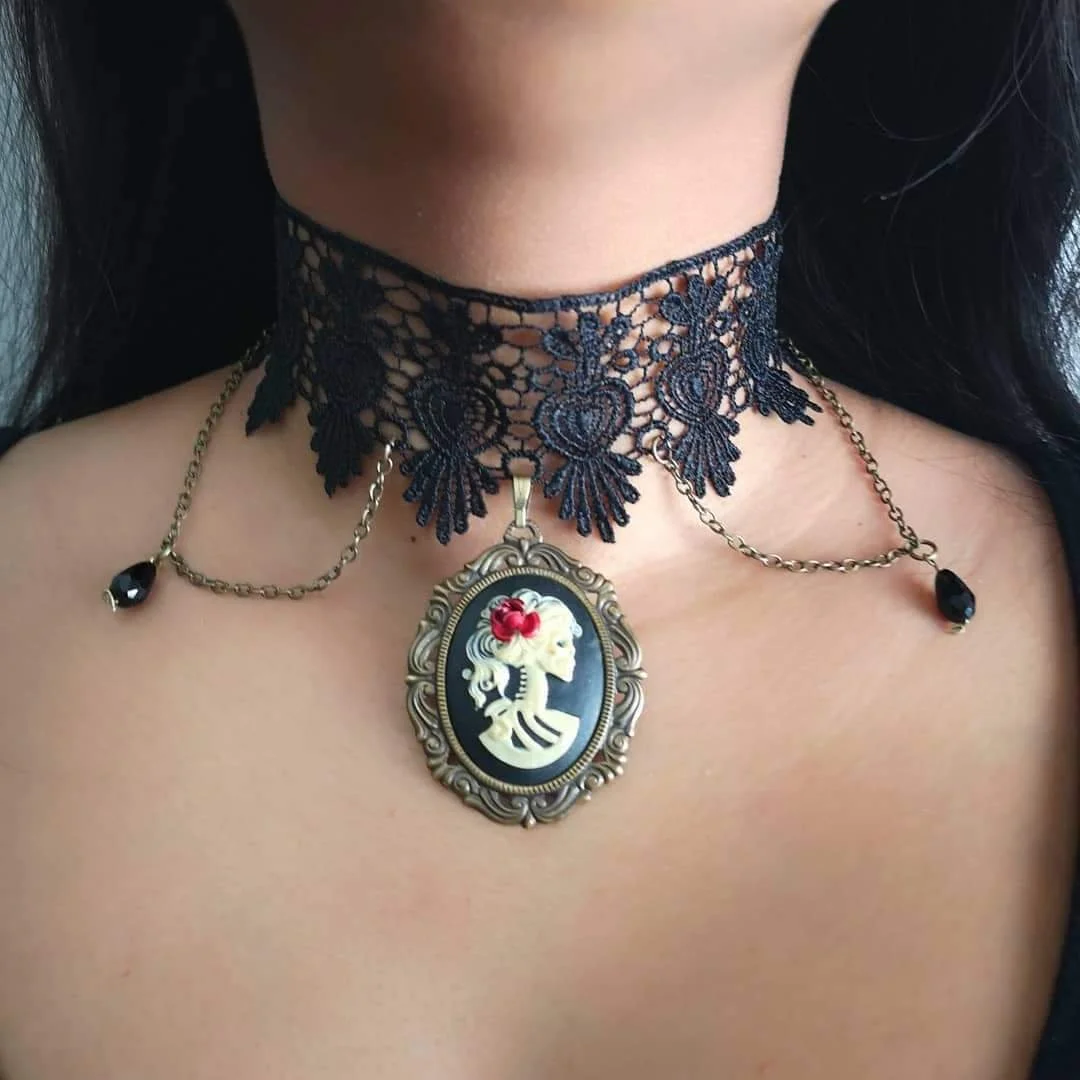
One of Sasha’s first designs
N: That's great advice. On your Instagram profile mention that you’re Indo-Caribbean – how does your heritage, if at all, influence your work?
S: It does influence the work a lot because I’m Indo-Guyanese, but I was born in Canada, so my background is diverse. And being someone who's Indo-Caribbean, first and foremost our culture is very heavily influenced by Indian culture. My parents were influenced by African-Chinese and Indigenous peoples there. And then in Canada, I grew up in Toronto, so I was literally influenced by everyone. A lot of the things that I loved about our culture is the jewellery – it's elaborate and so unique. There's a lot of expression and vibrancy and I love that, but I wanna make it darker. I guess one of the terms I would say is if I took Bollywood and put it in the upside down, that's my aesthetic. If people get that Stranger Things reference!
N: That’s a very good description!
S: Yeah, in our culture, we were always wearing so many colours and prints and I find, especially in Newfoundland, people are very minimalistic. I still go to work with big flowery shirts and everything and I just love the boldness of it, but I just wished it was a little bit darker. So that's why I started venturing out into goth. That's what I was very attracted to growing up and even now.
“when you look at pictures of me in high school, I had a funky style but I didn't fully dress the part. But I always knew it was inside of me.”
N: What do your family think about all the dark stuff that you're into? Do they just accept that’s who you are or do they think it's weird?
S: I am lucky that both my parents are, I don't wanna say rebels, but they paved their own path. My dad's a fashion manufacturer so he digs it a lot. He kind of ventured off from the community a bit – he's still tied to it, but he’s in a profession that was not commonly known as a Guyanese profession per se.
My mum was also very open-minded and she grew up in a very strict community as well. She has the best fashion sense and she's so lively and beautiful and just makes friends with everyone. And my dad is the same. My dad's a social butterfly and he's just one of the best dressers ever. Mind you, my dad is very religious and he still keeps up a lot of the traditions and everything. It's just he doesn't push it onto us. But now as I'm getting older, I wanna know because if I do have a family, at least it will give my child an option – if they wanna go down this path, this is what is traditional in our family. That would be awesome.
Going back to what got me into goth culture, there was a lot of nose jewellery and that was like the only piercing that was acceptable in my culture – nose piercing and ears piercings. Tattoos were a big no-no back in the day. And if you did, you gotta make sure you cover that up well! So that's why jewellery was the thing that I could wear, big jewellery, or something that was a little more outrageous and then go home and hide it.
I always knew, when you look at pictures of me in high school, I had a funky style but I didn't fully dress the part. But I always knew it was inside of me. And at the end of the day, that's what really matters, no one can take that away from you.
N: You mentioned that nose and ear piercings were just about acceptable. How did you then discover the subcultures you are interested in?
S: When I was younger my mum was very strict and I had to be home early while my friends went out, so I watched Much Music, which is like MTV, so I watched a lot of music videos. I saw a lot of rock music videos and there were times that I would stay up late at night. And then there was this show called Much Loud where they played all the metal and heavy music. I was really captivated then.
Then when I got into middle school and high school, I had a lot of friends in bands and I was just hanging out with them. I got into it more, the love just grew and I've always admired them when they dress differently or with more of the aesthetic that I’d like.
I kind of felt comforted and it's like, okay, if I can't do it, at least I get to look at you. And then I got older and I said, okay, these are the few things that I can do so I'm just gonna push the limits. I'm gonna wear big, outrageous earrings and I'm gonna have a big hoop on my nose – that didn't always go down well, but my parents have always been supportive.
The community questions it a bit, but it is what it is. Family, family friends, and people that would look at you and say things or make a smart comment to your parents and then your parents are just like “do what you want, but just when we go here, dress like this,” and I'm like okay, that's fair. So it's not about me. But it's really tough, isn't it? Like other people sort of putting in their opinions and then that influencing your parents and they then come back to you and say stuff.
N: That’s very relatable. Are there any final thoughts you’d like to leave our readers with?
S: In general, when you put yourself out there, you're encouraging others to as well. When people are scared to do things, if you do it, just imagine the impact that you're having on other people who need it. Maybe even more than you do.
Check out Culturisto Alternative Shop on Instagram.
About Naz
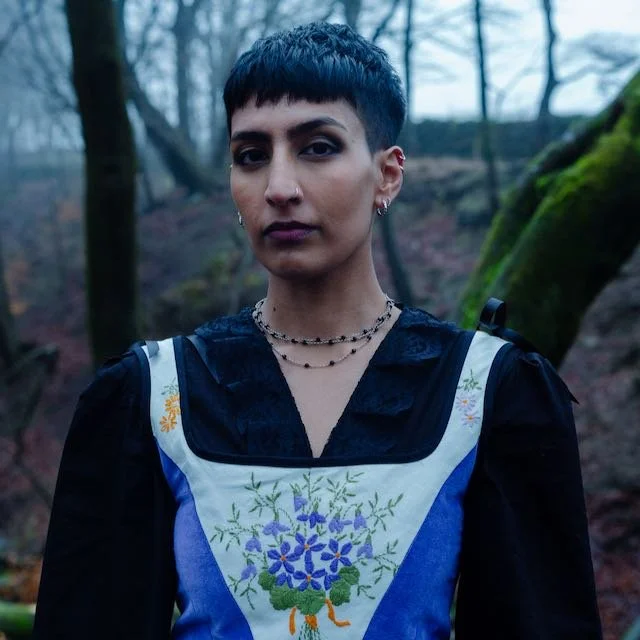
Naz Toorabally is a queer, British Indo-Mauritian musician and zine maker based in north London. She is the founder of WEIRDO Zine and fronts post-punk band Dogviolet. When she’s not making music or zines, you’ll find Naz hanging out with her cat.