Interview by Naz Toorabally
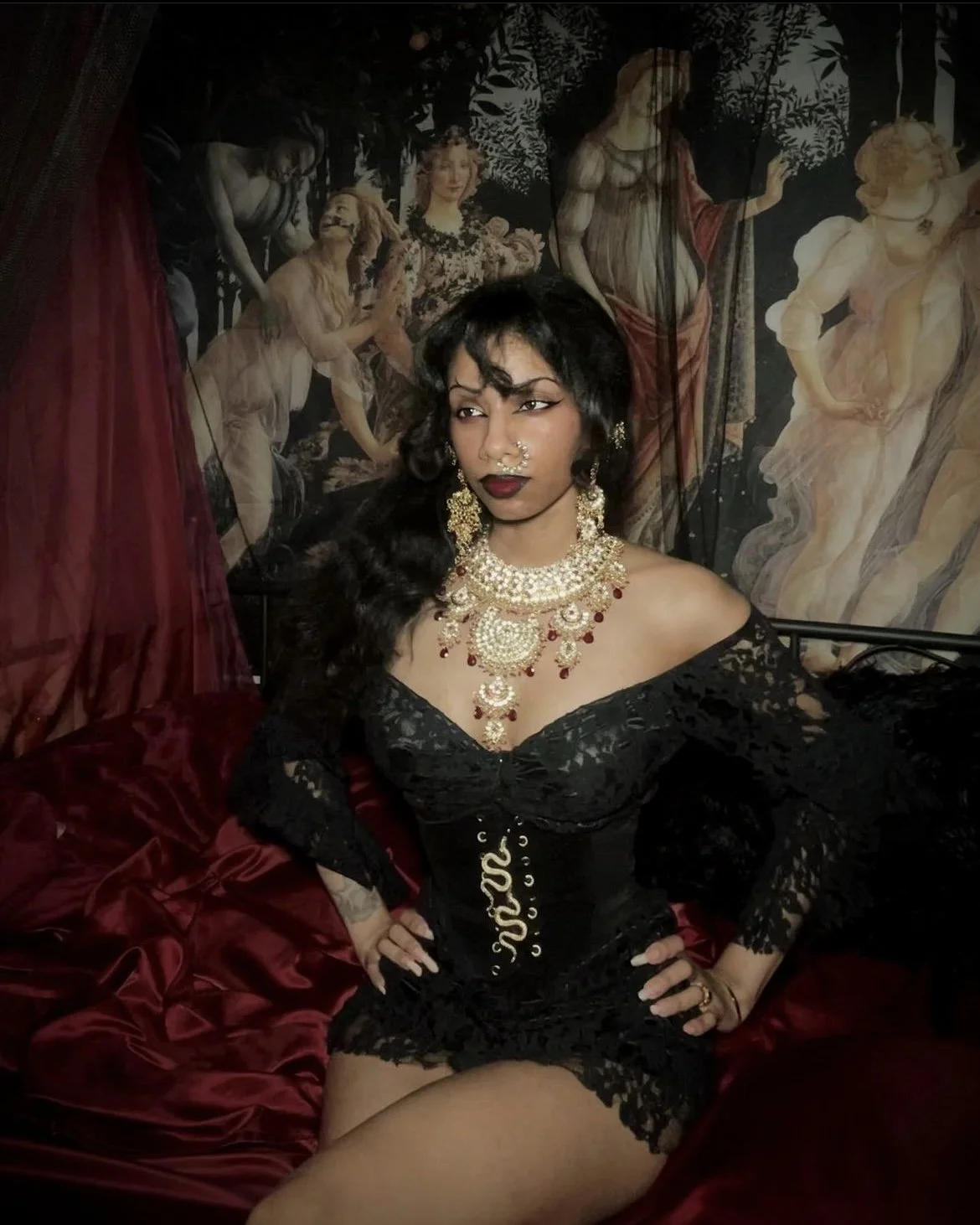
Nadja Naagini
Nadja Naagini is an Indo-Guyanese fashion influencer whose work is for lovers of all things gothic, macabre and dark; she’s also known for her gory horror art and belly dancing. Her style is distinctive, blending her Indian and Guyanese heritage with vampyric and gothic couture, and has led to her growing a following of over 75k followers on Instagram.
We spoke in the summer of 2023, and the interview was originally meant to be published as part of The Fashion Issue, but it never made it to print. In this interview Nadja shares her journey into discovering goth, speaking out on cultural appropriation in the goth community and horror art.
Naz T: Hi Nadja! How did you discover the goth subculture?
Nadja N: Through my parents actually. My dad likes to listen to a lot of goth bands and new wave and my mum too, but my mum is more of the one that used to go to the clubs. My dad is more into literature and listening to music.
NT: I love hearing people's stories when it's their parents who've introduced them because it's kinda similar for me. What were some of those early bands that got you into it?
NN: Well, I would say some goth-adjacent bands like Depeche Mode, Siouxsie and the Banshees – that was one of my earliest – and The Cure of course and the basic bands like Bauhaus. Then from there, I just kind of found my own goth bands that I like.
NT: Who are some of your current favourite goth bands?
NN: London After Midnight, Sisters of Mercy, Rizzo Stone.
NT: In terms of your personal style and aesthetics, how has that developed over the years?
NN: Well, I've always been into alternative fashion and culture. I listened to goth bands, but I started off with more of the emo culture. But I was still listening to goth music and a whole bunch of music like metal, goth, emo – all of that.
But mainly I was listening to emo music at the time. So then from there, I guess, as I got older, I'm like, I don't want to listen to emo music any more, it's kind of depressing. So I started listening to more goth catalogues. I'm a big history fan, I love history. So I guess for me it was always the Victorian vampire goth aesthetic – it always called out to me.
NT: It's no secret that the goth scene is not as representative as it could be. There are big brands perpetuating racist tropes and more people within the goth community are discussing their experiences of racism. Can you tell me about the ways you’ve been using your platform to address some of this?
NN: Just existing online, I think is one way.
And, I call it the cultural appropriation of goths using tribal jewellery – they have no idea what it means wearing it and calling it goth. I actually came across online stores and there's people that sell tribal jewellery and they will relabel it as something that it's not.
I saw a nose chain and somebody relabelled it as a battle chain. And I was like, what is a battle chain? That's a knot. I had called it out and then that's when a lot of people got mad. And they were like, “oh, who cares?” And I was like, “what do you mean who cares? It has a long history. Respect that.” That's my issue right now with the goth community – the whole, not respecting tribal jewellery and where it comes from.
“I got mass unfollowed when I posted one of the videos calling out goths for stealing tribal designs from actual tribal cultures”
NT: How have the white folks in the goth community responded to you speaking out on these issues?
NN: I've actually had friends that are white goths unfollow me when I called certain things out. And I was like, okay, that's kind of shady. You say that you're for people of colour, but when people of colour speak out on their issues, you unfollow or you try to silence this – how are you an ally?
I got mass unfollowed when I posted one of the videos calling out goths for stealing tribal designs from actual tribal cultures. I had a lot of hate mail. I had people making fun of me. It was just crazy. So I didn't care. I wanted the message to get out there.
NT: Thank you for speaking out about these issues and sorry you had to deal with the harassment that came out of that.
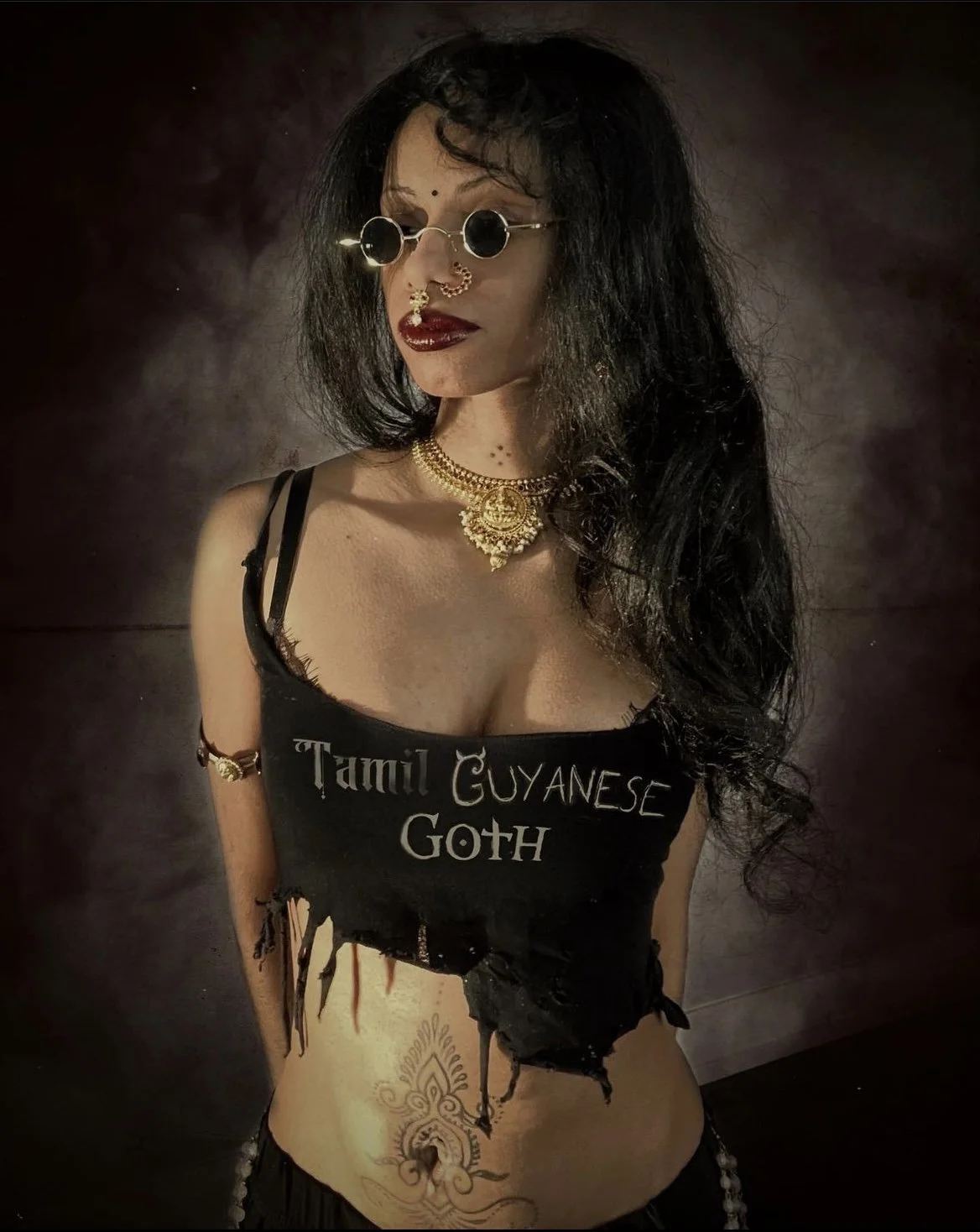
NT: What’s been the response from the Indo-Guyanese or Caribbean community to your work? One thing crops up is people from our own communities or our families feel that us being into alternative or goth means that we're whitewashed because of the music we listen to or how we dress.
NN: My only issue is that because I'm mixed, I do run into problems with certain communities about how I am. I'm pretty cultured. I grew up cultured. So I always kept that. I never really changed that. That's why I incorporated it into my gothic lifestyle. But, I do get a lot of backlash sometimes. When I was doing Caribbean videos with my goth attire. I got a lot of backlash. They thought I was satanic. I had people telling me that I'm the devil and things like that and I'm not. I guess because of my videos a lot of people in the Caribbean community reached out to me and they were like, “Oh, thanks for bringing alternative culture and goth culture to the Caribbean community more.”
Because my videos went viral in the Caribbean community people were seeing that and they're like, “Oh, who is this?” And then a lot of people reached out to me and were like “Oh, I'm from so and so country and I'm also goth”. And no one really talks about Caribbean goth like that. I do get a lot of backlash when it comes to the Caribbean community sometimes. They'll basically think that what I'm doing is satanic or I'm a devil worshipper or whatnot.
NT: Yeah, when bringing together the subculture you love and your cultural heritage, sometimes people don't understand that these can coexist – it doesn't mean it's satanic or anything.
NN: Yeah, I have some people that follow me for being a representative of the Guyanese community and then I have people that follow me for being Caribbean. I have people that follow me for doing other types of fashion, but when they see I go all out into my gothic aesthetic some of them unfollow me and I'm like, I already showcased that on my profile that this is what I am. I don't just make culture content or just like one content. I do a lot of different things.
“Don't feel discouraged that you aren't allowed to wear certain things because your friends are wearing them or you can't listen to certain music around your parents”
NT: The last thing that I wanted to ask you about was your horror art. What was your inspiration behind developing some of this artwork and then deciding to actually put it out there?
NN: I have always been into history. I went to Catholic school, so I got to see paintings in the Catholic Church and also I was an art major in college and an art history major so I had to study a lot of art and memorise the time period, the name of the painting, all that. I can paint, I can draw and stuff, but it gets boring after a while and I kind of wanted to just do something on the spot and I also do photography, so I'm like why don't I just do digital editing and make art that way and that's how that whole thing happened.
And plus I think I shared in my [Instagram] Story one time that I have a fascination with human anatomy because I wanted to be a surgeon when I was younger.
I kind of taught myself everything through the years. It was trial and error. I had to keep trying to find my style with this whole thing. And now it's actually been maybe eight years it took me to find this style of how my art is now. And I was like, this is it. So I stuck with the whole gore thing mixed with the whole kind of like ethereal looking aesthetic.
A lot of people critique it. They're like “this is too gory” and I'm like “this is art”. You don't tell people to censor things on Halloween. Why are you telling me to censor my art?
NT: Are there any final thoughts you’d like to share with our readers?
NN: I know that within South Asian culture, families are usually strict. Especially when it comes to how we dress, what we wear, what we listen to, or who the friends we have. I guess I want to share for people to just be themselves, but don't feel discouraged that you can't be yourself especially for minors that are entering the goth community and they have strict parents.
Don't feel discouraged that you aren't allowed to wear certain things because your friends are wearing them or you can't listen to certain music around your parents.There are ways that you can do that. Don't feel discouraged that you can't do that yet. Because when you get older you can branch out and do whatever you want. So it's just waiting for that.
That's what happened to me. When I was younger, I wasn't allowed to do certain things. When I got older, now I'm allowed to do a lot of things. My parents were very accepting of me being alternative, but certain things I couldn't wear. I had to wait until I got older and because I was in a religious family, there's certain music that I wasn't allowed to listen to either. So I would have to secretly listen to it.
But now I can listen to whatever I want because I'm older. My advice is don't feel like you're left out just because you can't dress a certain way or you can't do certain things because of the community. Just wait or find ways. There's ways to get around that.
Follow Nadja Naagini on Instagram.
About Naz
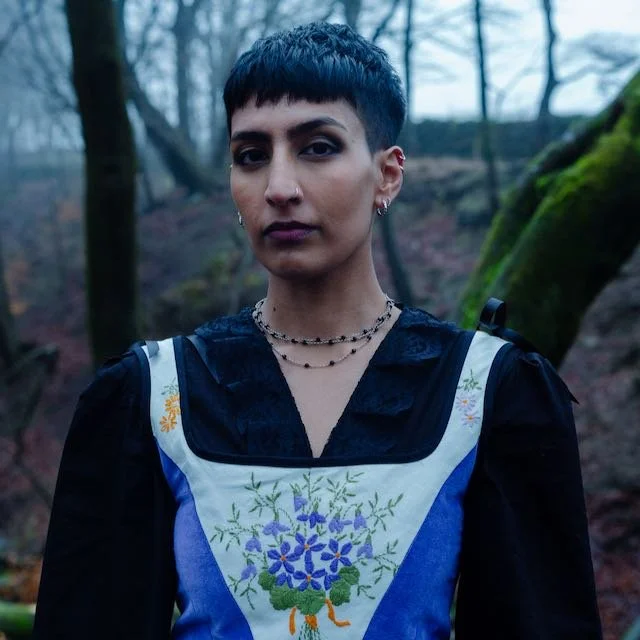
Naz Toorabally is a queer, British Indo-Mauritian musician and zine maker based in north London. She is the founder of WEIRDO Zine and fronts post-punk band Dogviolet. When she’s not making music or zines, you’ll find Naz hanging out with her cat.